How to Start a Logistics Company in Namibia: Cross-Border Corridor Guide
Learn how to start a logistics company in Namibia, including BIPA registration, NamRA customs clearance, road freight permits, Walvis Bay corridor routes, cross-border trade and logistics services.
Starting a logistics company in Namibia can provide access to one of Southern Africa’s strategically positioned transport and trade markets. Namibia connects the Atlantic Ocean to landlocked markets through the Walvis Bay corridor, while established road networks provide access to Botswana, South Africa, Zambia, the Democratic Republic of Congo and southern Angola.
However, building a successful logistics business involves much more than purchasing trucks or arranging freight. Entrepreneurs must consider company registration, customs compliance, transport permits, clearing requirements, warehousing, route planning and cross-border regulations.
The cross-border corridor guide for logistics companies in Namibia provides useful context on the relationship between route selection, customs and the legal operating structure.
Namibia’s Logistics Infrastructure Sector
Namibia has developed an important position in regional transport and logistics because of its ports, road network and connections to neighbouring economies. The country’s Atlantic coastline gives businesses access to international shipping routes through Walvis Bay and Lüderitz.
The Namibia logistics and infrastructure sector includes infrastructure and services intended to facilitate domestic and regional movement of goods, while corridor development supports more efficient cross-border transactions and customs operations.
For entrepreneurs, this creates opportunities in several areas, including:
- Road freight
- Freight forwarding
- Customs clearing
- Warehousing
- Distribution
- Sea freight
- Air freight
- Fleet management
- Transport brokerage
- Project logistics
- Supply-chain services
- Cargo handling
The opportunity is particularly relevant for businesses that can provide reliable logistics services between Namibia and neighbouring countries.
Understanding the Walvis Bay Corridor
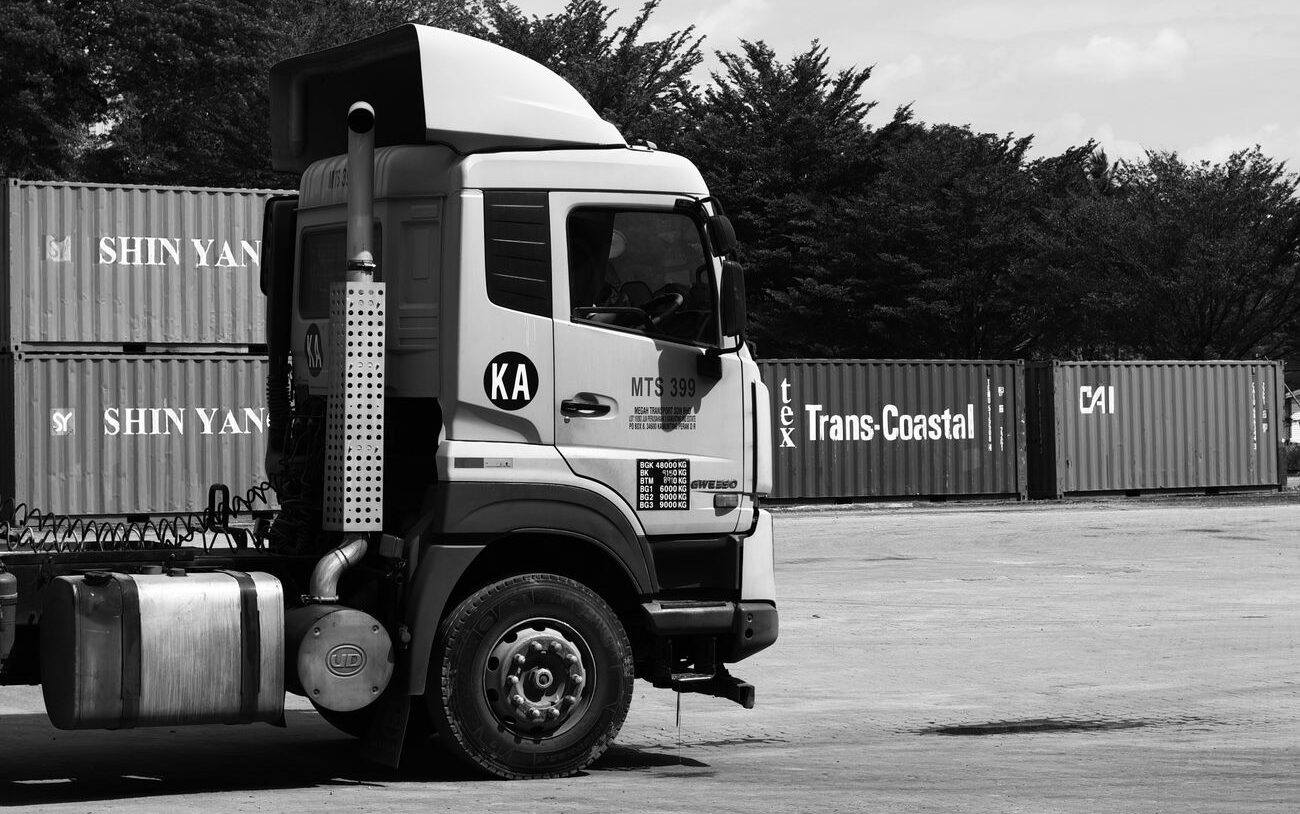
The Walvis Bay corridor is central to Namibia’s regional logistics strategy. It connects the country’s western coastline with inland markets and provides routes for cargo moving between Namibia and countries in the Southern African region.
The Namibia Logistics Hub information from the Walvis Bay Corridor Group highlights the role of the country’s logistics corridors in facilitating and accelerating cross-border trade.
Several important corridors form part of Namibia’s regional logistics network.
Trans-Kalahari Corridor
The Trans-Kalahari Corridor connects Walvis Bay with Botswana and South Africa. It is particularly important for road freight moving between Namibia and the Gauteng and Botswana markets.
Walvis Bay-Ndola-Lubumbashi Development Corridor
This route provides access toward Zambia and the Democratic Republic of Congo, creating opportunities for freight operators serving mining, manufacturing, retail and industrial customers.
Trans-Cunene Corridor
The Trans-Cunene Corridor provides a connection between Namibia and southern Angola. Businesses operating along this route must account for the separate customs, transport and border requirements applicable to Angola.
Trans-Oranje Corridor
The Trans-Oranje Corridor links Lüderitz with South Africa’s Northern Cape, providing another route for regional cargo movement.
These corridors should not be treated as a single regulatory environment. Each destination can have different customs procedures, permits, documentation and commodity controls.
Conduct Market Research Before Launching
Before establishing a logistics company, determine exactly what type of logistics operation you want to build.
A company focused on local deliveries has very different requirements from a business transporting commercial cargo across several borders.
Start by identifying:
- Target customers
- Cargo types
- Origin and destination countries
- Expected shipment volumes
- Vehicle requirements
- Warehouse requirements
- Customs responsibilities
- Required permits
- Insurance requirements
- Pricing and operating costs
- Competitors
- Expected delivery times
The freight market should also be analysed before investing heavily in vehicles. Operators need to understand whether sufficient recurring cargo exists to keep vehicles productive.
A truck that spends several days waiting for return loads can significantly reduce profitability, even when the initial transport rate appears attractive.
Create a Business Plan
A logistics business plan should translate the market opportunity into realistic financial and operational assumptions.
A comprehensive plan should cover:
- Business structure
- Target market
- Services offered
- Route network
- Fleet requirements
- Staffing
- Fuel expenses
- Maintenance
- Insurance
- Customs and compliance costs
- Warehousing
- Marketing
- Revenue projections
- Working capital
- Break-even analysis
The business plan should distinguish between revenue generated from transportation and revenue generated from other services such as customs clearance, warehousing or freight forwarding.
Register the Logistics Company in Namibia
A logistics company operating commercially in Namibia generally needs an appropriate legal structure and registration with the Business and Intellectual Property Authority (BIPA).
Entrepreneurs should determine whether they are establishing a Namibian company, partnership or another permitted structure. Foreign companies establishing a sustained place of business in Namibia may also need to consider external-company registration.
The requirements for registering a company in Namibia should be reviewed when preparing the business structure and supporting documentation.
The legal structure should correspond with the actual business model.
For example, a business that owns trucks, employs drivers, signs customer contracts and maintains local premises may require a different structure from a company that simply acts as a freight intermediary.
Align Registration With Your Operations
Company registration should not be treated as an isolated administrative step.
The structure should support:
- Business banking
- Tax registration
- Employment
- Contracts
- Licensing
- Customs operations
- Insurance
- Premises
- Fleet ownership
- Beneficial ownership compliance
Foreign investors should establish the intended operating model before preparing registration documents.
Businesses can also review the BIPA company registration documents required in Namibia before submitting their applications.
Register for Tax and Customs Operations for a Logistics Company in Namibia
Namibia Revenue Agency (NamRA) plays a central role in the country’s customs environment.
For businesses involved in importing, exporting or clearing cargo, customs compliance needs to be integrated into everyday operations. Companies should complete the applicable NamRA registration in Namibia as part of establishing their tax and compliance framework.
Customs documentation may involve information such as:
- Importer details
- Exporter details
- Tariff classification
- Customs value
- Country of origin
- Quantity
- Description of goods
- Supporting commercial documents
- Applicable permits
Businesses should ensure that the information supplied to customs accurately reflects the underlying commercial transaction.
Use ASYCUDAWorld Correctly
Namibia uses ASYCUDAWorld for customs processing. This means inaccurate or incomplete information can disrupt the movement of cargo.
A logistics company should establish a document-control process before cargo is dispatched.
The commercial invoice, packing information, transport documents and customs declaration should correspond with each other.
Where a third-party clearing agent is used, the logistics company should still maintain internal oversight of the information submitted on behalf of its customers.
Understand Customs Clearing Requirements
Freight forwarding and customs clearing are closely related but are not necessarily the same service.
A company that clears goods for another importer or exporter for reward may require a NamRA clearing-agent licence.
Businesses considering this service should confirm the current licensing requirements directly with NamRA before beginning operations.
The UN Trade Facilitation E-Learning discussion on Namibia’s trade facilitation reforms also illustrates the importance of coordinated public and private-sector measures in improving regional trade and logistics.
Decide Whether to Clear Cargo Yourself
A new logistics company does not necessarily need to build an in-house customs-clearing department.
There are two broad approaches:
Use a licensed clearing agent:
The logistics company focuses on transport, coordination and customer service while an authorised specialist handles customs clearance.
Develop an in-house clearing operation:
The company takes responsibility for the relevant licensing, compliance systems, premises, personnel and customs processes.
The second option can create an additional revenue stream but also introduces additional regulatory responsibilities.
Build a Reliable Road Freight Operation
Road freight is an important part of Namibia’s regional logistics network. Trucks connect ports, warehouses, industrial centres and border crossings.
However, operating commercial vehicles across borders involves more than having a registered truck.
Depending on the route, operators may need to address:
- Vehicle registration
- Operator documentation
- Driver requirements
- Cross-border transport permits
- Insurance
- Customs documentation
- Border procedures
- Vehicle roadworthiness
- Destination-country requirements
A customs declaration does not automatically provide permission for a truck to operate across an international border.
Plan Return Loads
One of the major challenges for transport companies is empty return capacity.
For example, a truck travelling from Walvis Bay to Johannesburg may generate revenue on the outbound trip but become unprofitable if it returns empty.
Successful operators therefore develop relationships with freight brokers, manufacturers, wholesalers, exporters and importers that can provide cargo in both directions.
The 2026 guide to finding truck loads in Namibia illustrates the importance of cargo availability along routes such as the Johannesburg-Windhoek corridor and the Walvis Bay gateway.
Consider Freight Forwarding Services
Freight forwarding can complement transportation services.
A freight forwarder may coordinate multiple stages of a shipment, including:
- Carrier bookings
- Cargo consolidation
- Documentation
- Port coordination
- Warehousing
- Customs clearance
- Inland transportation
- Delivery
Businesses can combine road freight, sea freight and air freight depending on the customer’s requirements.
For example, an urgent high-value shipment might be moved by air, while large volumes of industrial equipment may be better suited to sea freight followed by road transportation.
Companies operating across these services should clearly define their responsibilities to customers.
An established transport and logistics company in Namibia demonstrates how road, sea and air freight can be combined with warehousing, customs clearance and project logistics.
Explore Project Logistics
Project logistics can be particularly attractive in Namibia because of opportunities associated with mining, energy, infrastructure and industrial development.
Project cargo may include:
- Heavy machinery
- Mining equipment
- Construction machinery
- Industrial components
- Oversized cargo
- Energy equipment
- Specialized vehicles
These shipments require considerably more planning than ordinary commercial freight.
A project logistics operator may need to coordinate route surveys, lifting equipment, escorts, temporary storage, customs documentation and specialised transport equipment.
Strengthen Cross-Border Trade Compliance
Cross-border logistics involves multiple jurisdictions. A company should therefore avoid assuming that compliance in Namibia automatically satisfies requirements in another country.
Before dispatch, identify:
- Export requirements in the origin country.
- Transit requirements.
- Import requirements in the destination country.
- Road transport requirements.
- Commodity-specific controls.
- Customs documentation.
- Driver and vehicle requirements.
- Border-crossing procedures.
The trade facilitation environment continues to evolve, so operators should verify current requirements before every major route expansion.
For businesses with foreign owners, it is also useful to understand how to register a company in Namibia as a foreigner and how local operations affect the company’s compliance obligations.
Develop a Logistics Documentation System
Documentation is one of the most important operational controls for a logistics business.
Create a standard shipment file containing the applicable:
- Commercial invoice
- Packing list
- Transport documents
- Customs declarations
- Import or export permits
- Certificates of origin
- Vehicle documents
- Driver documents
- Insurance documents
- Customer instructions
The exact documents will vary depending on the cargo, route and transaction.
A central digital document system can reduce errors by ensuring that the warehouse, transport team, customer, clearing agent and management team work from the same information.
Companies should also understand how to register a business in Namibia when formalising their local operating structure.
Establish a Technology-Enabled Operation
Modern logistics companies increasingly depend on technology to monitor freight movement and improve customer visibility.
Useful systems may include:
- GPS vehicle tracking
- Electronic proof of delivery
- Fleet management software
- Accounting software
- Customer relationship management
- Inventory management
- Shipment tracking
- Digital document storage
Customers increasingly expect to know where their cargo is and when it is expected to arrive.
Technology can also help management monitor fuel consumption, vehicle utilisation, maintenance schedules and driver performance.
For companies that operate without maintaining a traditional physical office, remote business setup in Namibia can provide another model to consider, subject to the business’s regulatory and operational requirements.
Build Relationships Across the Logistics Chain
A logistics company rarely operates independently.
Its performance depends on relationships with:
- Transport companies
- Clearing agents
- Freight forwarders
- Warehouses
- Port operators
- Customs authorities
- Border agencies
-Insurance providers - Vehicle suppliers
- Fuel suppliers
- Importers
- Exporters
Strong partnerships can be especially valuable when expanding into unfamiliar cross-border markets.
The objective of the Namibia Logistics Hub is closely connected to improving regional connectivity and making cross-border movement more efficient. This broader logistics ecosystem creates opportunities for private operators that can provide dependable services.
Businesses requiring assistance with establishment, registrations and related compliance can explore business setup services in Namibia.
Control Logistics Costs
Fuel is often one of the largest operating expenses for road freight companies, but it is not the only cost that needs to be controlled.
Important cost categories include:
- Fuel
- Vehicle finance
- Repairs
- Tyres
- Driver salaries
- Insurance
- Licences
- Permits
- Customs-related costs
- Warehouse rent
- Administration
- Tracking systems
- Security
- Financing costs
Pricing should therefore be based on total operating cost rather than fuel cost alone.
A transport rate that appears profitable before maintenance, depreciation and empty return kilometres may actually produce a loss.
How to Set Up a Logistics Company in Namibia Step by Step
The step-by-step guide to setting up a logistics company in Namibia provides a useful framework for entrepreneurs planning market entry.
A practical sequence is:
Step 1: Define the Business Model
Choose whether the company will focus on transportation, freight forwarding, customs clearing, warehousing, distribution or a combination of services.
Step 2: Research the Freight Market
Identify cargo demand, customers, competitors, routes and pricing.
Step 3: Prepare a Business Plan
Calculate startup costs, operating expenses, revenue and working-capital requirements.
Step 4: Register the Business
Choose an appropriate structure and complete the required BIPA registration. Depending on the preferred structure, entrepreneurs can compare close corporation registration in Namibia with private limited company registration in Namibia.
Step 5: Complete Tax and Regulatory Registrations
Establish the company’s NamRA and other applicable registrations. Businesses should also assess whether they need income tax registration in Namibia and employer registrations where applicable.
Step 6: Obtain Required Licences and Permits
Confirm the requirements for customs clearing, cross-border transportation and the specific cargo categories involved.
Step 7: Acquire or Lease Equipment
Purchase or lease vehicles and other equipment based on confirmed demand rather than speculative expansion.
Step 8: Establish Operational Controls
Create procedures for dispatch, customs documents, vehicle inspections, cargo tracking and delivery confirmation.
Step 9: Secure Customers and Contracts
Develop recurring relationships with importers, exporters, manufacturers, retailers and other businesses.
Step 10: Expand Carefully
Only add routes, trucks or services once the existing operation demonstrates sustainable demand and cash flow.
Namibia as an International Logistics Hub
Namibia’s geographical position gives it an important role in regional logistics.
The JICA discussion of Namibia’s ambition to become an international logistics hub reflects the broader strategic objective of strengthening connectivity, competitiveness and regional economic integration.
For private businesses, this can create opportunities beyond conventional trucking.
A company can build a specialised logistics offering around a particular industry, route or customer type rather than attempting to serve every segment of the market.
For example, a business could specialise in:
- Mining logistics
- Agricultural freight
- Retail distribution
- Angola-Namibia transport
- Zambia-Namibia freight
- South Africa-Namibia transport
- Port-to-inland distribution
- Heavy equipment logistics
- Cold-chain logistics
- Customs and freight coordination
Specialisation can make it easier to build expertise and develop a strong reputation within a defined market.
Additional Registration and Compliance Considerations
A logistics company may have tax and administrative obligations beyond its initial company and NamRA registration.
For example, businesses employing staff should review the requirements for registering as an employer for PAYE in Namibia.
Companies dealing with foreign shareholders or non-resident service providers may also need to assess applicable withholding-tax obligations, including non-resident withholding tax on services and non-resident shareholders tax (NRST).
Where a business needs to demonstrate its compliance status to customers, banks or other counterparties, it can also review the process for applying for a NamRA certificate of good standing.
Other legal structures and arrangements may create additional obligations. For example, organisations using a trust structure should understand the process for registering a trust for tax purposes with NamRA.
A business that needs a professional address without immediately establishing a conventional office can also consider a virtual office in Namibia, subject to the requirements of the relevant regulators and service providers.
Ongoing compliance can be managed through appropriate company secretarial services as the business grows.
Frequently Asked Questions
How much does it cost to start a logistics company in Namibia?
The cost depends heavily on the business model. A freight coordination business can start with substantially less capital than a fleet-owning transport company. Major expenses can include company registration, premises, vehicles, insurance, permits, technology, staff and working capital.
Does a logistics company need a customs-clearing licence?
Not every logistics business needs to become a clearing agent. A company that clears goods for other importers or exporters for reward may need the applicable NamRA clearing-agent licence. Businesses should confirm their exact activities and licensing obligations before offering customs-clearing services.
Why is the Walvis Bay corridor important for logistics companies?
The Walvis Bay corridor provides Namibia with strategic connections to regional markets, including Botswana, South Africa, Zambia, the DRC and Angola. It supports road freight, port-related logistics, distribution and broader cross-border trade opportunities.

Final Considerations for Starting a Logistics Company in Namibia
A successful logistics company in Namibia requires more than trucks and customers. The strongest operators combine route knowledge, reliable logistics services, customs compliance, effective documentation, technology and disciplined cost management.
The country’s logistics infrastructure sector, ports and regional corridors provide a strong foundation for businesses involved in road freight, freight forwarding, customs clearance, warehousing and project logistics.
For entrepreneurs entering the market, the best approach is to define the commercial route first, establish the correct legal and regulatory structure, understand customs responsibilities and build an operating model capable of handling cross-border transactions reliably.
Businesses can review the requirements to register a company in Namibia as a foreigner before committing to a foreign-owned logistics operation. They can also compare the forms and fees for registering a private company in Namibia when budgeting for incorporation.
For foreign entrepreneurs asking whether ownership is possible, the guide on whether a foreigner can register a company in Namibia addresses this specific issue.
Organisations that intend to operate as nonprofit entities rather than commercial logistics businesses can review the NGO registration process in Namibia to determine whether that structure is appropriate.
For assistance with establishing a logistics operation, registration, tax compliance or related business requirements, contact the Namibia business setup team.